Discrete Element Method (DEM) Services by Insight Design Consultant:
Insight Design Consultant offers advanced Discrete Element Method (DEM) simulation services for bulk material handling systems across mining, cement, steel, power, chemical, and process industries. Our DEM analysis helps industries understand particle flow behavior, optimize equipment performance, reduce wear, eliminate material buildup, and improve operational efficiency.
Using industry-leading DEM software, we simulate real-time particle interactions, material trajectories, impact forces, dust generation, and flow characteristics for powders, granules, ores, coal, alumina, pellets, limestone, and other bulk materials.
Our DEM Simulation Services:
We provide end-to-end DEM engineering services, including:
DEM Engineering Services
- Bulk Material Flow Analysis
- Particle Interaction & Collision Modeling
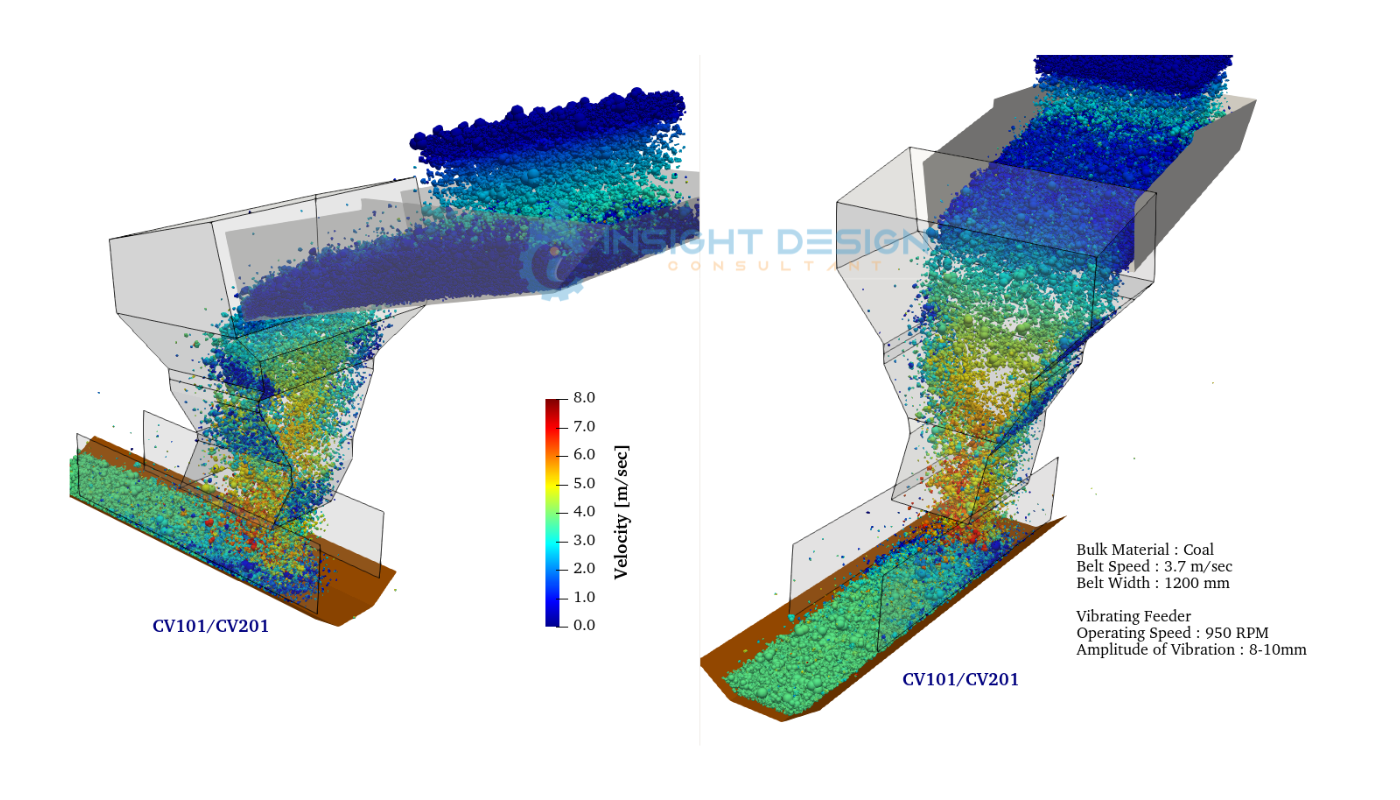
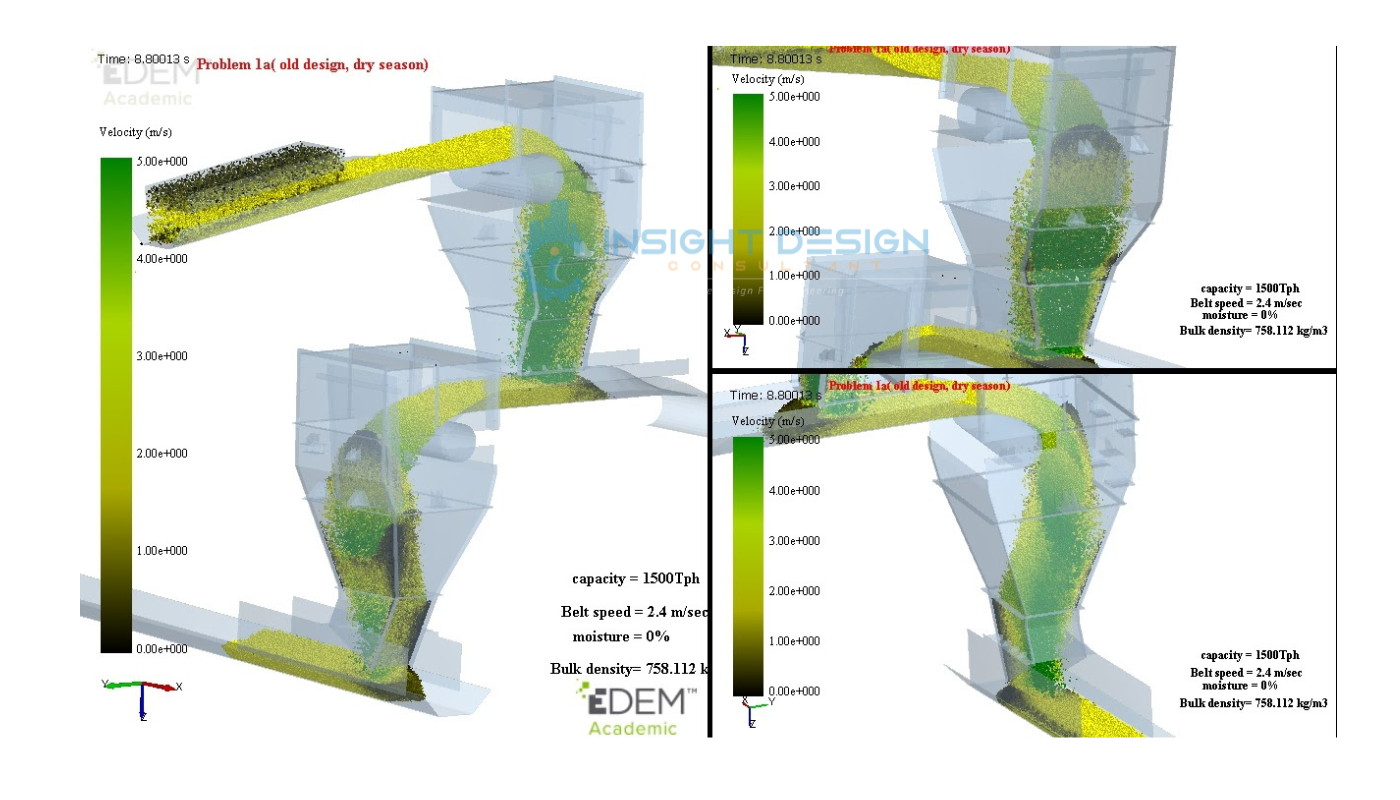
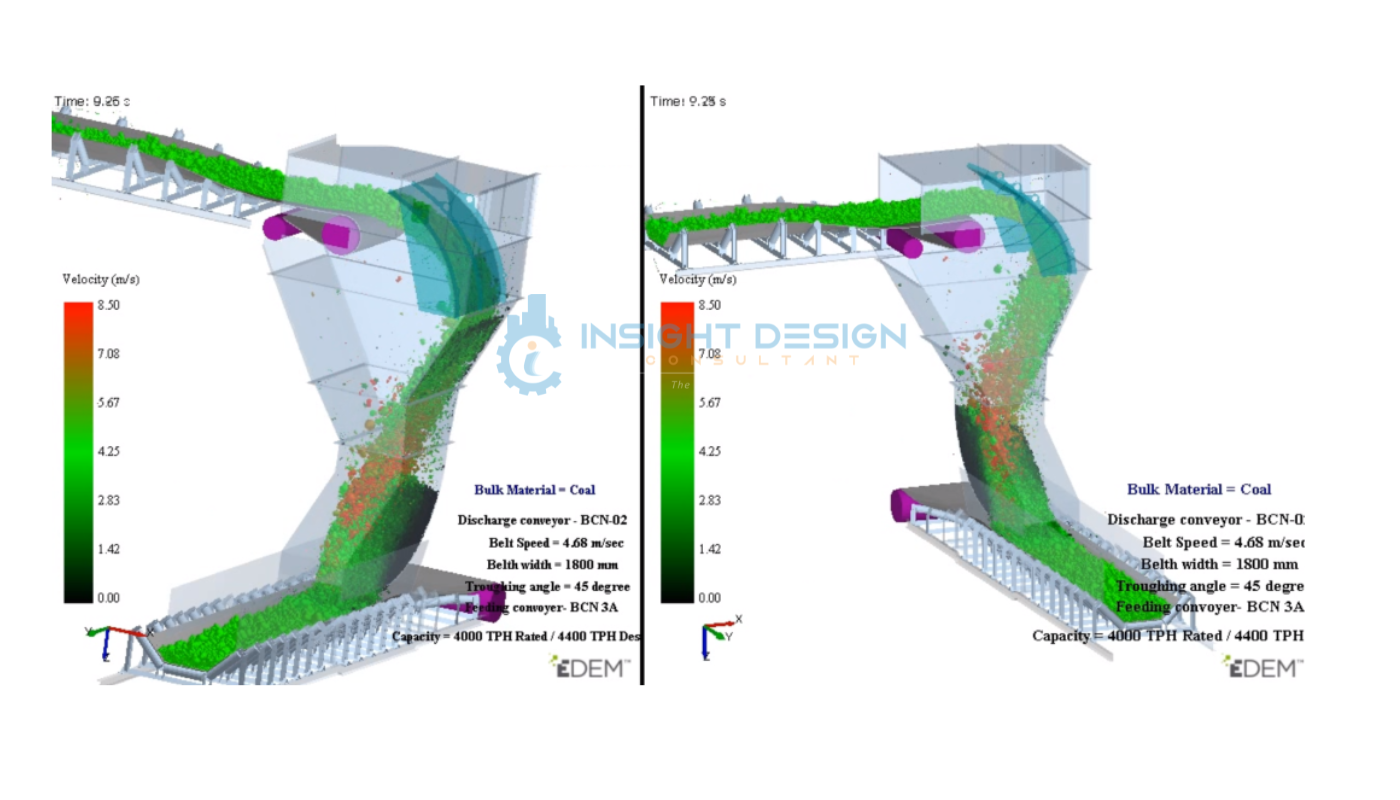
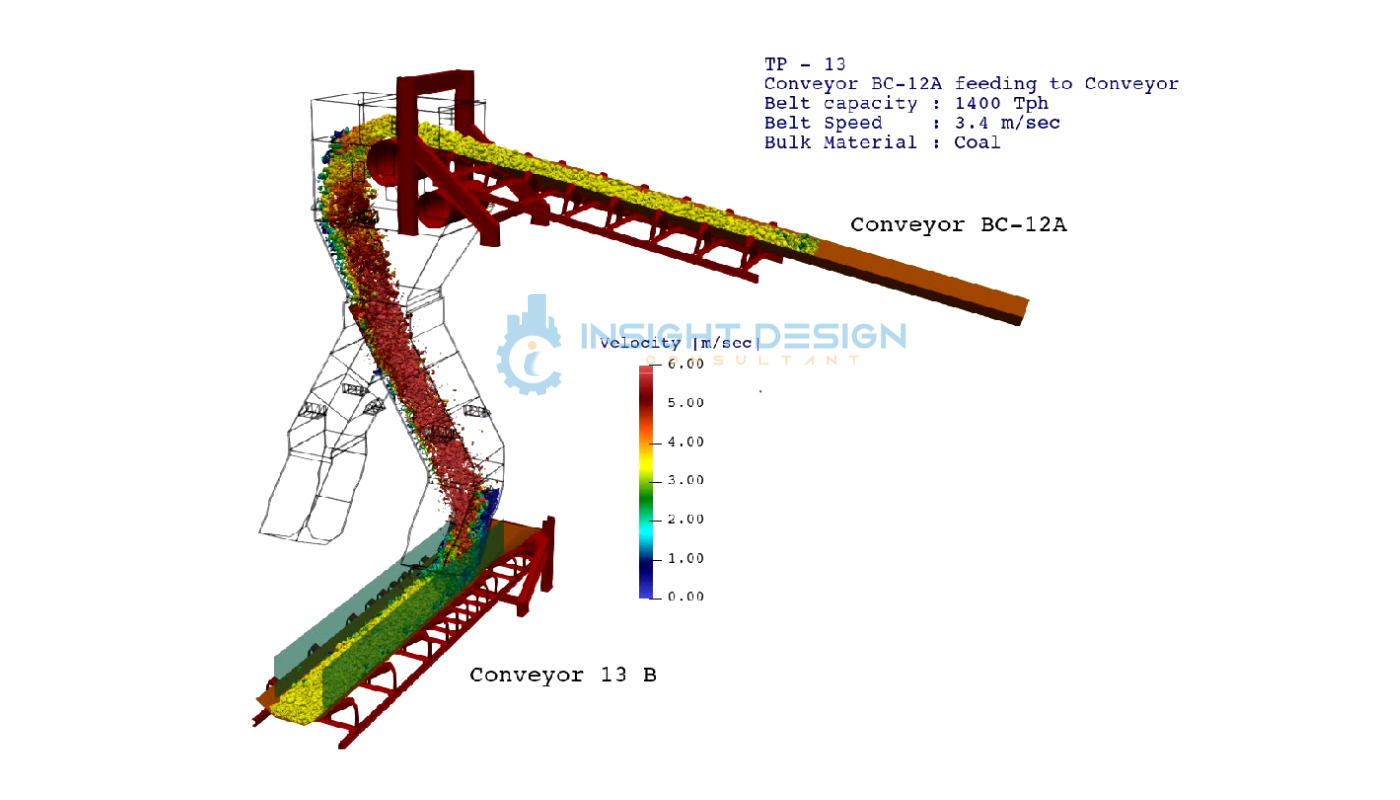
- Conveyor Transfer Chute Analysis & Belt Conveyor Transfer Optimization
- Conveyor, Chute, Hopper & Silo Flow Simulation
- Material Buildup, Blockage & Flow Optimization Analysis
- Dust Generation & Deposition Study
- Wear, Erosion & Impact Force Prediction
- Particle Trajectory & Granular Flow Behavior Analysis
- Crusher, Screener & Feeder Performance Optimization
- Mixer, Blender & Mill Performance Analysis
Advanced DEM Applications
- Mixing, Blending, Segregation & Agglomeration Studies
- Stockpile & Reclaim Flow Analysis
- Powder Handling, Powder Flow & Storage Analysis
- Bulk Material Handling System Optimization
- Coupled DEM–CFD Simulation (Gas–Solid Flow Analysis)
- CFD-DEM Multiphase Particle Flow Simulation
- Predict Real Material Behavior Before Manufacturing
- Reduce Blockages, Spillage & Excessive Wear
- Improve Equipment Performance & Process Efficiency
- Enhance Plant Safety & Operational Reliability
Benefits of DEM Analysis
- Reduced material spillage and dust generation
- Improved material flow performance
- Elimination of chute blockage and buildup
- Reduced equipment wear and maintenance
- Optimized chute and hopper design
- Improved conveyor transfer efficiency
- Enhanced plant productivity and reliability
- Reduced operational downtime
We Deliver
- Detailed DEM simulation report
- 3D particle flow animation videos
- Velocity and impact contour plots
- Wear prediction analysis
- Flow optimization recommendations
- Chute and hopper modification suggestions
- Engineering design recommendations
- Fabrication Drawing with BOQ
Why Choose Insight Design Consultant?
- Experienced simulation engineers & analysts.
- Advanced DEM tools & industry-proven workflows.
- ISO 9001:2015 certified engineering consultancy.
- Strong presence across India & overseas markets.
- Integrated services: CAD + DEM + CFD + FEA.
- Customized, practical, and cost-effective solutions.
Insight Design Consultant delivers accurate and reliable DEM simulation solutions that help industries improve process performance, reduce maintenance costs, and achieve efficient bulk material handling operations.
Get in Touch with us
EXPLORE MORE SERVICES
Modeling and Simulation
Advanced modeling and simulation solutions delivering accurate analysis, optimized performance, and faster design decisions..
Read moreFinite Element Method (FEM)
A numerical technique used to analyze and solve complex structural, thermal, and mechanical engineering problems accurately.
Read moreComputational Fluid Dynamics (CFD)
A simulation method used to analyze fluid flow, heat transfer, and aerodynamic performance using numerical techniques.
Read moreDiscrete Element Method (DEM)
A numerical simulation technique used to model and analyze the behavior and interaction of individual particles and granular materials.
Read more